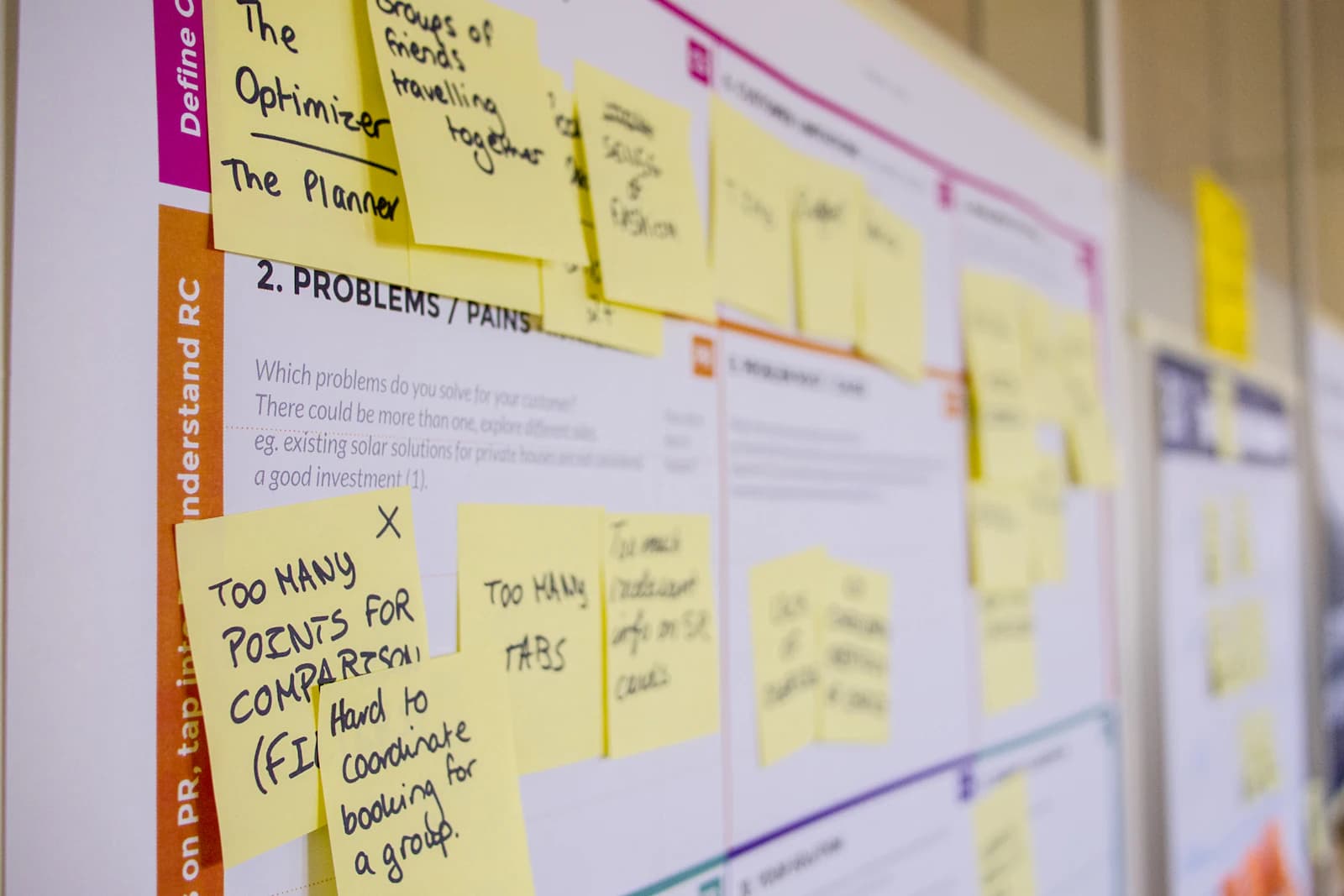
Discovery
Workshops and research that align stakeholders on goals, users and scope before anything is built.
What we build
Product discovery
We run a fixed-length discovery before you build: workshops and research that agree the problem, the users and the first release, ending with a prototype, roadmap and estimate.
New product ideas
Test whether a problem is worth solving before committing to build.
Complex programmes
Align many stakeholders on goals, scope and priorities.
Before a procurement
Define needs well enough to compare vendors or write a specification.
Stalled projects
Reset a project that has lost direction with a shared understanding.
Product redesigns
Decide what to keep, change and drop before redesigning an existing product.
How to get started
Three steps to a plan for discovery
- 1Tell us what you needUse the project form or book a call. A few sentences about the goal is enough to start.
- 2Free technical consultationWe go through your goals, users, existing systems and constraints with you.
- 3Your planA detailed plan covering the right tech stack, architecture, timeline and budget. Then you decide.
How it works
From what users said to themes
We group interview notes into themes your team can act on (affinity mapping). Pick a note, then the theme it belongs to.
Interview notes · pick one
Map assumptions, test the riskiest
We map your assumptions by importance and evidence, and test the important, unproven ones first. Drag each to place it.
Test first
Important, but with little evidence. These become the first research questions and prototype tests.
- Clinics will share live calendars
- Staff will use a new dashboard
Our approach
How the work runs
Kick-off
Goals, success measures, constraints and the people involved.
Research
Stakeholder and user interviews, existing data and competitor review.
Map
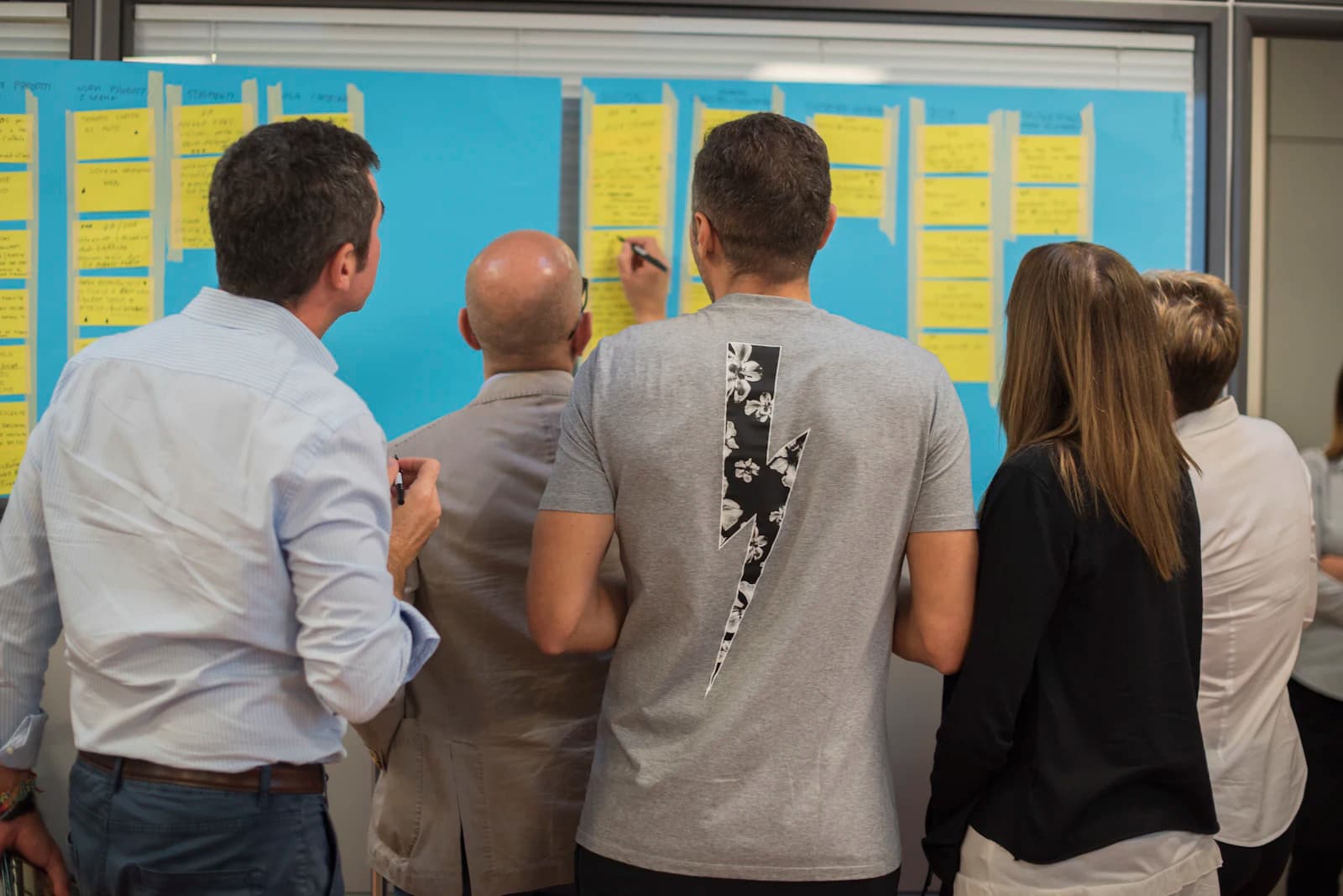
Journeys, assumptions and opportunities, mapped together in workshops.
Prioritize
Riskiest assumptions tested first; scope agreed with MoSCoWPrioritizing scope into must have, should have, could have and won't have this time..
Plan
A roadmap, prototype and estimate for the first release.
What we'll need from you
Having these ready keeps the work moving.
A sponsor
The person who'll decide at the end of discovery.
Stakeholders' time
For interviews and a few workshops.
Access to users
A handful of users or customers to interview.
Existing material
Research, data, strategy and technical documents.
Who's on the project
Our team, working with sponsor from yours.
From ours
Discovery lead
Facilitates workshops and keeps the discovery focused.
Services
Discovery services
Discovery workshops
Kick-off, journey mapping and prioritization workshops with your stakeholders.
User and stakeholder research
Interviews, a review of your data and an analysis of competitors.
Assumption testing
The riskiest assumptions tested with prototypes and users.
Roadmap and estimate
A prioritized scope, roadmap and estimate for the first release.
Deliverables
What you receive
2 of 6 pinned · tap a note to pin it
In your hands
What the documentation looks like
Every project ends with documents your team can run with. Here is an excerpt of one of them.
Online booking for clinics
Agreed at the end of discovery
Problem
Patients can only book by phone during opening hours, so staff spend much of the morning on calls and patients book elsewhere.
Who it's for
Returning patients booking routine appointments, mostly on phones, often in the evening.
We'll know it worked when
Half of routine bookings are made online within six months, and morning call volumes fall.
Measuring success
How success is measured
What we report on in discovery projects. Which measures apply, and their targets, are agreed with you at the start.
The goal
Assumptions tested
Riskiest assumptions tested and whether they held.
Scope that fits
We agree the first release's scope with MoSCoW, against your team's capacity. Move features between buckets and change the capacity.
Click a feature to move it between must, should, could and won't.
Capacity used
- Must
- 34d
- Should
- 11d
- Could
- 9d
A healthy plan: must-haves fit with room for should-haves and surprises.
The green line marks 60% of capacity, the DSDM guideline for must-haves.
Readiness check
Are you ready for
discovery?
Five questions, about a minute. You'll see what to settle first and a sensible starting point.
Is there a sponsor who can make the final decision?
Result
Answer each question. Your result, and anything to settle first, appears here. Nothing is sent until you choose to.
How to start
From first call to production
Start where you are. Each step ends with a decision, so you commit to the next one only when it makes sense.
Prototype · How an engagement runs
Free technical consultation
One or two sessions
Talk through the goal, the users, the systems involved and any deadlines.
Layers you receive
- # A clear view of scope and priorities
- # A recommended next step
- # A plan covering stack, architecture, timeline and budget
Estimate the value
What it could be worth to you
Enter your own figures. The formula is shown, and the estimate can go with your enquiry.
Budget protected by testing assumptions first
Budget redirected
$63,000
for the programme
Build budget × share on little-used features × share redirected
Drag a field's label left or right to change it.
Inputs
Build or buy
When you don't need
a custom build
Part of the free technical consultation: when an existing product covers the need, we recommend it instead of a custom build. These are the options we weigh, alongside the tools you already have.
Both
- We facilitate the first discovery with your team in the room, then hand over the templates and methods for the next one.
Technologies and standards
Chosen for your project
Discovery runs on shared boards and documents. Choose a kind of tool to see the ones teams use and what for.
Miro
Remote workshops, journey maps and affinity boards with large groups.
Methods
- Jobs to be done
- Assumption mapping
- MoSCoW
- Design sprints
Workshops
- Miro
- FigJam
Research
- Interviews
- Surveys
- Analytics review
Outputs
- Journey maps
- Service blueprints
- Figma prototypes
Next chapter
02 · Understand
Hear from users and watch them work, so decisions rest on evidence.
Chapter 02
UX research
Define phase
Questions
Common questions
about discovery
How long is a discovery?
Typically two to six weeks, depending on how many users and stakeholders are involved and how uncertain the problem is.
What do we have at the end?
A shared definition of the problem and users, tested assumptions, a prioritized scope, a prototype and an estimate for the first release.
Do you run design sprints?
Yes, as a focused five-day format for one question. A discovery is broader and may include a sprint to test a specific idea.
How is a project priced?
Well-defined scopes, such as an audit or a set number of screens, are delivered as fixed-price engagements; ongoing product design is provided by a dedicated team. The free consultation ends with a plan covering scope, timeline and budget.
More in UI/UX Design
How it connects
- Relies onUX researchInterviews and testing are how discovery learns about users.
- FeedsUI/UX designDiscovery sets the goals and scope for design.
- Pairs withUX trainingTeams trained in discovery methods can run the next one themselves.
Planning discovery work?
Start with a free technical consultation: a detailed plan covering the right tech stack, architecture, timeline and budget for your project.
Start a project